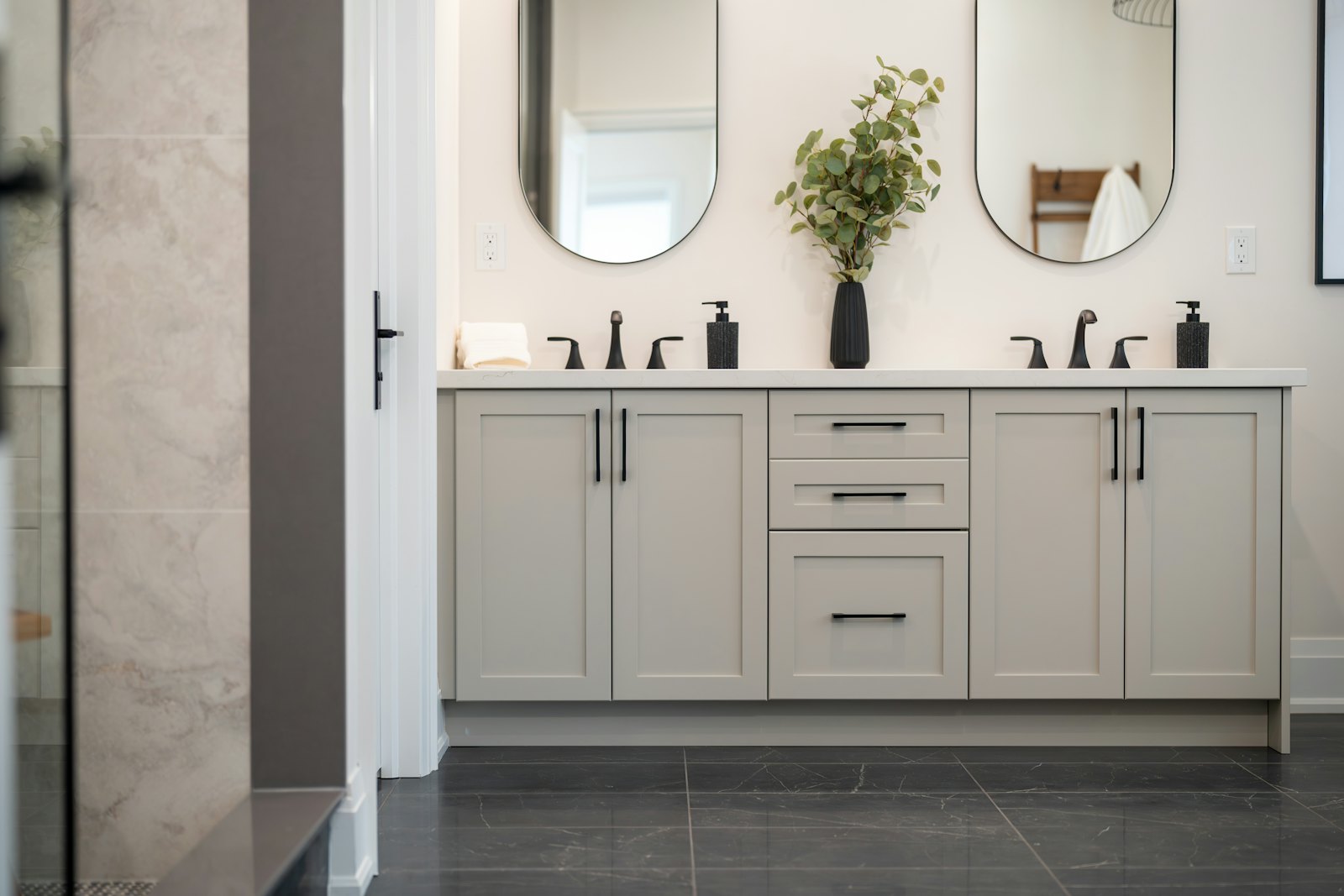
The three honest budget tiers
Bathroom remodels split cleanly into three real tiers, and the price spread between them is bigger than most homeowners expect. A cosmetic refresh runs $4,500–$9,000. A standard remodel runs $14,000–$25,000. A full gut with relocated plumbing runs $26,000–$60,000+. Skipping over which tier you actually need is the single biggest cause of budget overrun.
Cosmetic refresh ($4,500–$9,000)
New vanity and faucet, new toilet, new mirror and lighting, paint, possibly a new floor over the existing subfloor. Tile and tub stay. 5–10 working days. Permits often not required. The right tier if your bathroom layout works and the wet areas are fine.
Standard remodel ($14,000–$25,000)
Re-tile shower or tub surround, new flooring, new vanity and fixtures, new toilet, possibly a tub-to-shower conversion (don't remove the only tub in the house). Plumbing supply lines often replaced; drains stay where they are. 3–4 weeks. Permits required.
Full gut ($26,000–$60,000+)
Strip everything to studs and subfloor. New rough plumbing (drains often relocated), new electrical, new walls, new floors, new fixtures, new tile, often a new layout. 5–8 weeks. Multiple inspections. The tier where you finally fix that awkward layout the builder did in 1978.
Where the money actually goes
- Labor (30–35%): Plumber, electrician, tile setter, GC oversight. The single biggest line.
- Fixtures (15–20%): Toilet, faucet, shower valve, accessories. Mid-range Kohler/Delta vs premium Brizo/Toto is a 2.5× spread.
- Tile and surfaces (15%): Material is $4–$15/sq ft. Installation is $9–$15/sq ft labor for standard, more for mosaic or large-format.
- Plumbing rough (10–15%): New supply, drain modifications, vent. Spikes if you move the toilet.
- Vanity and counters (8–10%): Stock vanity $400; mid-range $1,500; custom built-in with quartz counter $4,000+.
- Electrical (5%): GFCI outlets, exhaust fan upgrade, vanity lighting, possibly heated floor.
- Permits and disposal (5%): $200–$600 permits, $300–$500 dumpster.
The hidden costs
- Subfloor rot: Pulling up tile around a 30-year-old shower routinely reveals soft subfloor. Add $400–$1,500.
- Cast iron drain replacement: Pre-1965 homes have cast iron stacks that disintegrate when tapped. Replacement adds $1,200–$3,000.
- GFCI / arc-fault circuit upgrades: Modern code requires AFCI/GFCI in bathrooms. Adds $400–$800.
- Asbestos abatement: Pre-1980 homes occasionally have asbestos in vinyl flooring or pipe insulation. Testing $200; abatement $1,500–$4,500.
Regional pricing (medium standard remodel)
| Metro | Multiplier | Typical total |
|---|---|---|
| New York, NY | 1.42× | $26,980 |
| San Francisco, CA | 1.45× | $27,550 |
| Boston, MA | 1.32× | $25,080 |
| Los Angeles, CA | 1.28× | $24,320 |
| Seattle, WA | 1.26× | $23,940 |
| Washington, DC | 1.24× | $23,560 |
| Chicago, IL | 1.10× | $20,900 |
| Denver, CO | 1.08× | $20,520 |
| Miami, FL | 1.06× | $20,140 |
| Austin, TX | 1.04× | $19,760 |
Frequently asked questions
How long does a bathroom remodel take?
A cosmetic refresh (paint, vanity, fixtures, lighting) is 5–10 working days. A standard remodel (new tile, tub-to-shower conversion, flooring) is 3–4 weeks. A full gut to studs with relocated plumbing is 5–8 weeks. Add 2–4 weeks if you're moving the toilet drain — that's the single biggest schedule killer.
Tub vs shower — which adds more value?
Keep at least one bathtub in the house for resale (buyers with kids especially want one). For a primary or guest bath where another tub exists, a frameless glass walk-in shower outsells a tub by 2:1 in design surveys. Removing the only tub in a 2-bath home will hurt resale.
Can I move the toilet during a remodel?
Yes, but it triples the plumbing cost. A toilet drain (4-inch closet bend) requires opening the floor, rerouting cast iron or PVC, and pitching the new line at ¼" per foot. Budget $1,800–$4,000 for a same-floor relocation; second-story moves are even more.
What does "full gut" actually mean?
Removing everything down to studs and subfloor: drywall, flooring, vanity, toilet, tub, shower, all fixtures. New rough plumbing, new electrical, new wall and floor finishes. If walls don't come down, it's usually called a "standard" remodel rather than a gut.
Where is the money usually spent?
Roughly: 30–35% labor, 15–20% fixtures, 15% tile/surfaces, 10–15% plumbing rough-in, 8–10% vanity and counters, 5% electrical, 5% permits and disposal. Labor is the biggest line and where contractors hide margin — always ask for labor and materials separately.
Will permits really hold up the project?
Yes — and they're worth it. Plumbing/electrical permits require rough and final inspections. Skipping them means undisclosed work shows up in the next inspection and the next sale. Permit fees are $200–$600. Contractors who suggest skipping them are usually trying to hide unlicensed labor.