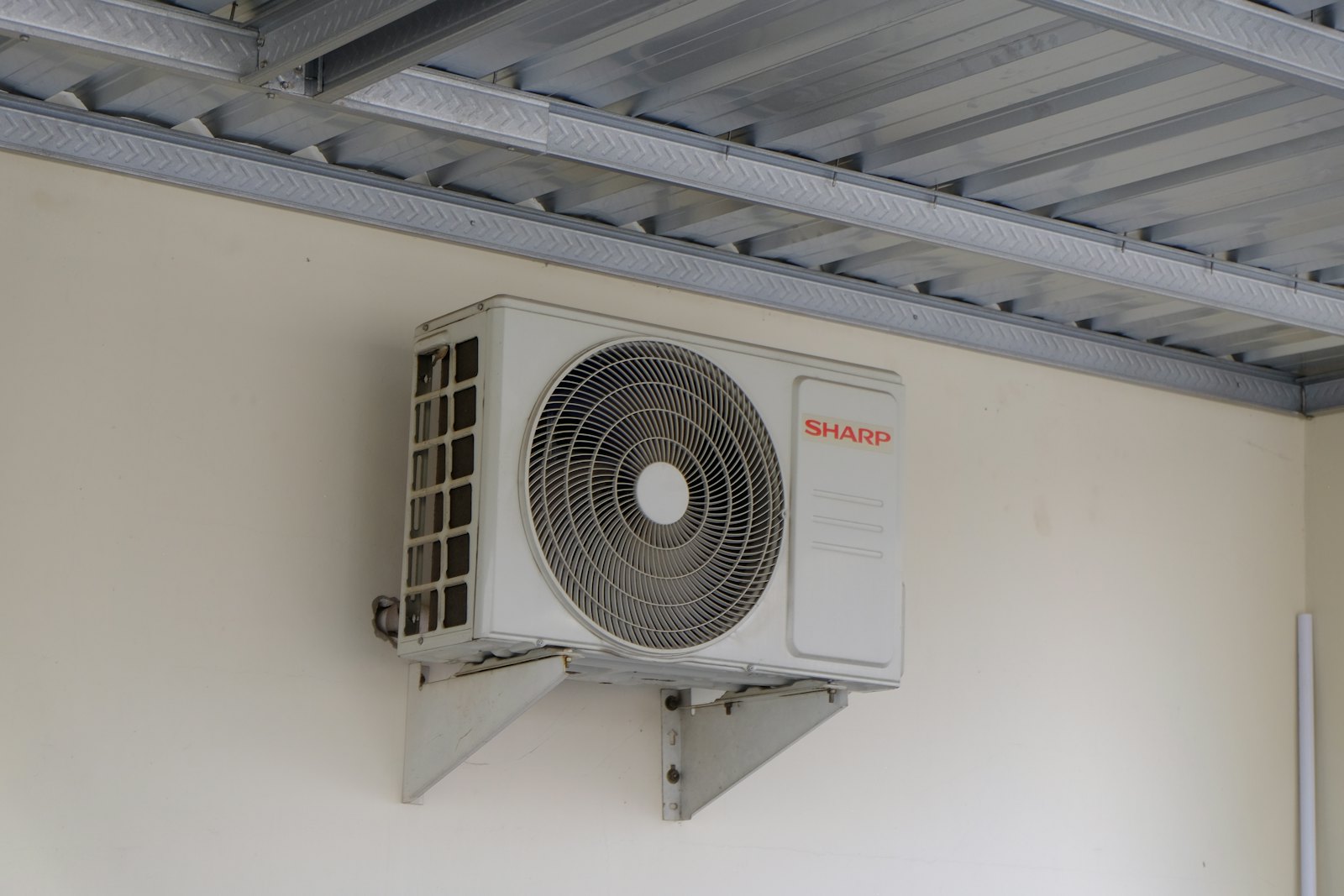
What goes into HVAC pricing
An HVAC quote is mostly equipment cost, then labor, then a fight with your existing ductwork. Equipment is straightforward — a 3-ton 16 SEER central AC condenser is $1,800–$2,800 wholesale, marked up 80–120% by the contractor. Labor is two HVAC techs for one to two days at $90–$140/hr loaded. Where things get expensive is when bad ducts force scope creep mid-job.
Equipment costs by system type
- Central AC (3-ton, 16 SEER): $4,200–$6,500 equipment. Add $2,400 labor for a like-for-like replacement.
- Heat pump (3-ton, 18 SEER2): $5,800–$8,400 equipment. The IRA 30% credit applies, capped at $2,000/year.
- Cold-climate heat pump (CCHP): $7,800–$11,500. Worth it above the 36th parallel (north of Tennessee, basically) if you'd otherwise need a furnace+AC pair.
- Mini-split (3-zone, 24,000 BTU total): $4,400–$7,800 equipment. Each additional zone is $800–$1,400.
- Furnace (80% AFUE gas): $1,800–$3,200 equipment. 95% AFUE adds $700–$1,200 but pays back in 4–7 years on gas.
The ductwork question
This is where 40% of HVAC budgets go off the rails. A pre-quote duct pressure test costs $200–$400 and tells you whether your ducts leak. Industry standard is leakage under 6%; pre-1990 homes often test at 25–35%. If your ducts leak that badly, the 18 SEER system you're paying for performs like a 13. Ductwork sealing is $1,200–$1,800; full replacement is $5–$8 per square foot of conditioned space ($10,000–$16,000 typical).
Permits, refrigerant, and the rebate stack
Permits run $150–$400 nationally. Refrigerant has shifted from R-410A to R-454B as of 2025; new systems on the new refrigerant cost $200–$500 more but are mandated. Don't let a contractor sell you a "remaining inventory" R-410A system — the parts supply chain is winding down. Stack the federal IRA 30% credit with utility rebates ($300–$1,500 typical) and state-level incentives. ENERGY STAR's rebate finder shows what's available by ZIP.
Regional cost adjustments
| Metro | Multiplier | 3-ton heat pump install (typical) |
|---|---|---|
| New York, NY | 1.42× | $14,910 |
| San Francisco, CA | 1.45× | $15,225 |
| Boston, MA | 1.32× | $13,860 |
| Los Angeles, CA | 1.28× | $13,440 |
| Seattle, WA | 1.26× | $13,230 |
| Washington, DC | 1.24× | $13,020 |
| Chicago, IL | 1.10× | $11,550 |
| Denver, CO | 1.08× | $11,340 |
| Miami, FL | 1.06× | $11,130 |
| Austin, TX | 1.04× | $10,920 |
Frequently asked questions
How do I size HVAC for my house?
A reliable rule of thumb is 1 ton of cooling capacity per 500–600 sq ft of conditioned space, but the right answer is a Manual J load calculation that accounts for insulation, windows, orientation and ceiling height. Oversizing wastes money on equipment and short-cycles the system; undersizing leaves you uncomfortable in summer.
What is the IRA tax credit on heat pumps?
The Inflation Reduction Act gives a 30% tax credit (up to $2,000/year) for qualified heat pump installations. ENERGY STAR-rated heat pumps and most cold-climate models qualify. There are also state and utility rebates that stack on top — sometimes another $1,000–$8,000.
Should I replace ductwork with a new system?
If your existing ducts are leaking 15%+ of conditioned air (very common in older homes), yes. A new system on bad ducts loses 25–35% of its efficiency. Have the contractor pressure-test before quoting. Sealing leaks is $1,000–$1,800; full replacement is $5–$8/sq ft of conditioned area.
Is a heat pump better than a furnace + AC?
In climates that don't hit sustained sub-15°F temperatures, a modern heat pump is more efficient than gas + AC and the IRA credits skew the math further. Cold-climate (CCHP) heat pumps work down to -15°F but cost $1,500–$3,000 more than standard. Below -10°F, hybrid systems (heat pump + gas backup) are still common.
Mini-split vs central — which is cheaper?
Mini-splits are cheaper if you don't already have ductwork ($4,500–$8,000 for a 3-zone). Central systems are cheaper if your ducts are good ($7,500–$11,000 for 3-ton). The break-even is roughly: do your ducts need replacement? If yes, ductless wins by $3,000+.
How long does HVAC installation take?
A direct equipment swap is a 1-day job for most contractors. Adding ductwork or going from no-AC to central adds 2–4 days. Mini-split installs are typically 1 day per zone. Permits and inspection can add a week of calendar time.