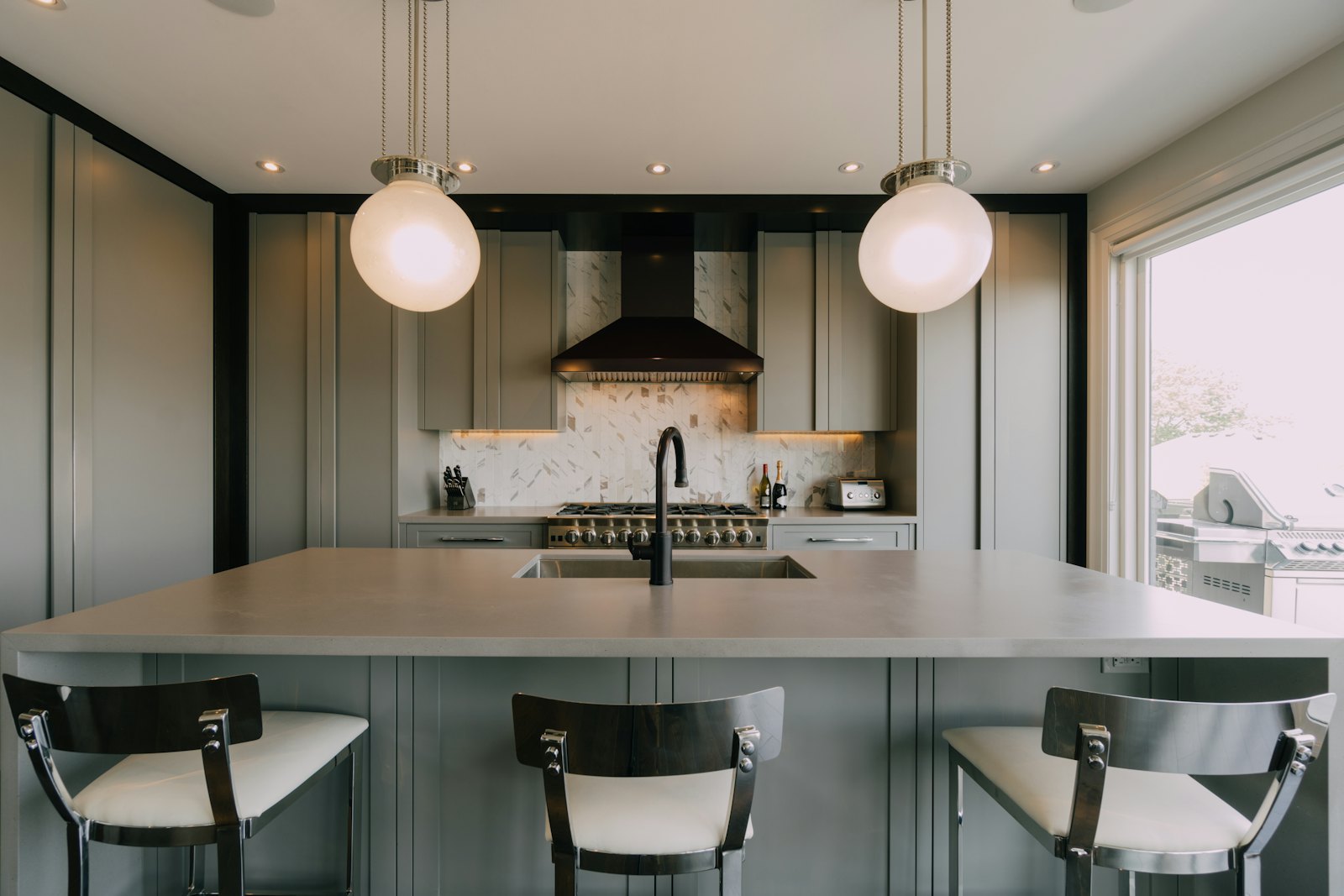
Kitchen remodels are where homeowners learn the most uncomfortable lesson about home services: the contractor's quote and the actual final cost are often unrelated documents. The number on the contract is the floor, not the ceiling. Here's a tier-by-tier line-item breakdown for 2026 — and where the change orders actually come from.
The three honest budget tiers
Tier 1: Cosmetic refresh ($14,000–$22,000)
- Cabinet refacing or paint: $3,500–$6,500
- New mid-range counters (laminate or budget quartz): $2,400–$4,200
- New mid-range appliance package: $4,800–$7,500
- New backsplash: $1,200–$2,400
- Updated lighting and hardware: $800–$1,800
- Paint, minor electrical, labor: $1,500–$3,000
Timeline: 2–3 weeks. Permits often not required. Right tier when the layout works and cabinets aren't physically failing.
Tier 2: Mid-range remodel ($42,000–$58,000)
- Semi-custom cabinets (200 sq ft kitchen, ~25 lf): $11,000–$15,000
- Quartz countertops (50 sq ft): $3,500–$5,000
- Mid-range appliance package: $7,800–$11,000
- New flooring (LVP or tile): $1,800–$3,200
- New sink and faucet: $750–$1,400
- New backsplash: $1,400–$2,800
- Plumbing rough-in (sink/dishwasher relocation if any): $1,800–$3,500
- Electrical rough-in (new circuits, recessed lighting): $1,400–$2,800
- Labor (GC, installers): $9,000–$13,000
- Permits, inspection, disposal: $700–$1,200
Timeline: 6–10 weeks. Permits required. The most common tier for owner-occupied remodels in 2026.
Tier 3: Full-gut custom ($90,000–$160,000+)
- Custom cabinets (locally built or top-tier brand): $24,000–$45,000
- Premium counters (quartz, marble, custom edge profiles): $7,000–$14,000
- Premium appliances (Sub-Zero, Wolf, Miele): $22,000–$45,000
- Wall removal with structural header: $4,000–$10,000
- New layout — plumbing, gas line, electrical relocations: $7,000–$14,000
- Premium flooring (real hardwood or large-format porcelain): $4,000–$9,000
- Designer fees: $4,500–$12,000
- Labor (specialized trades, longer timeline): $15,000–$25,000
Timeline: 10–16 weeks plus 12–16 week cabinet lead time. Permits required. Right tier for homes you'll own 10+ years.
Where change orders actually come from
Three sources cause 80% of kitchen remodel cost overruns:
- "While we're at it" upgrades. Once cabinets are out, the empty walls invite paint, electrical upgrades, and re-routing. Budget 10–15% contingency or you'll be paying with credit cards.
- Subfloor surprises. Pulling old flooring routinely reveals soft subfloor or out-of-level pours. Add $800–$3,000.
- Code-required upgrades. Modern code requires AFCI/GFCI on most kitchen circuits, range hood vented to exterior, and proper outlet spacing. If your existing kitchen doesn't meet code, the renovation triggers compliance. $1,500–$4,000 typical.
Cabinet decisions, in plain English
The single biggest budget lever is cabinets. Stock IKEA cabinets at $220/lf install in days and look fine for 8–12 years. Semi-custom Cabico/Plain & Fancy at $480/lf hit a quality sweet spot. True custom at $950/lf is built to your kitchen's exact dimensions in a local cabinet shop with dovetail joinery and 30-year structural lifespans. Pick by ownership timeline: under 5 years = stock, 5–10 = semi-custom, 10+ = custom.
The appliance question
Splurge on what you use daily. Range and refrigerator run constantly and have visible quality differences across price tiers. Dishwasher and microwave are 90%-as-good at mid-range. A Bosch dishwasher at $1,000 cleans virtually identically to a panel-ready Miele at $2,500.
Working with a designer vs DIY layout
For Tier 1 and most Tier 2 remodels, you don't need a designer — the contractor's existing plans work. For Tier 3 with new layout, a kitchen designer ($4,500–$12,000) usually pays for themselves through better cabinet utilization, smarter appliance placement, and avoiding $5K mistakes. The designer fee on a $120K project is decimal noise; on a $40K project it's overkill.
Use the calculator
Plug your specific kitchen size and choices into the kitchen remodel cost calculator for an itemized estimate based on the same per-unit math used above.
Frequently asked questions
How much should I budget for a kitchen remodel in 2026?
For a 200 sq ft kitchen: cosmetic $14,000–$22,000, mid-range $42,000–$58,000, full-gut custom $90,000+. Budget 10–15% contingency on top — kitchen remodels surface more "while we're at it" upgrades than any other home project.
Why have kitchen remodel costs jumped since 2023?
Cabinets are up 18–24%, appliances up 12–18%, labor up 14% nationally. The biggest single driver is custom cabinet lead times stretching from 8 to 14 weeks, which forces homeowners into more-expensive semi-custom alternatives at 70%+ of custom price for 80% of the quality.
What kitchen remodel saves the most at sale?
A mid-range remodel ($42K–$58K) returns ~71% according to Remodeling magazine's 2025 Cost vs. Value. Upscale remodels return 55%. Cosmetic refreshes return 80%+ at the cost of looking "refreshed" rather than remodeled. Don't over-invest if you're selling within 3 years.
Should I open the wall to the dining room?
Architecturally trendy, structurally expensive. Removing a non-load-bearing wall is $1,500–$3,500. A load-bearing wall with header installation is $4,000–$10,000. Most 1960s–1990s ranches have load-bearing walls between kitchen and dining. Get an engineer's evaluation before committing.