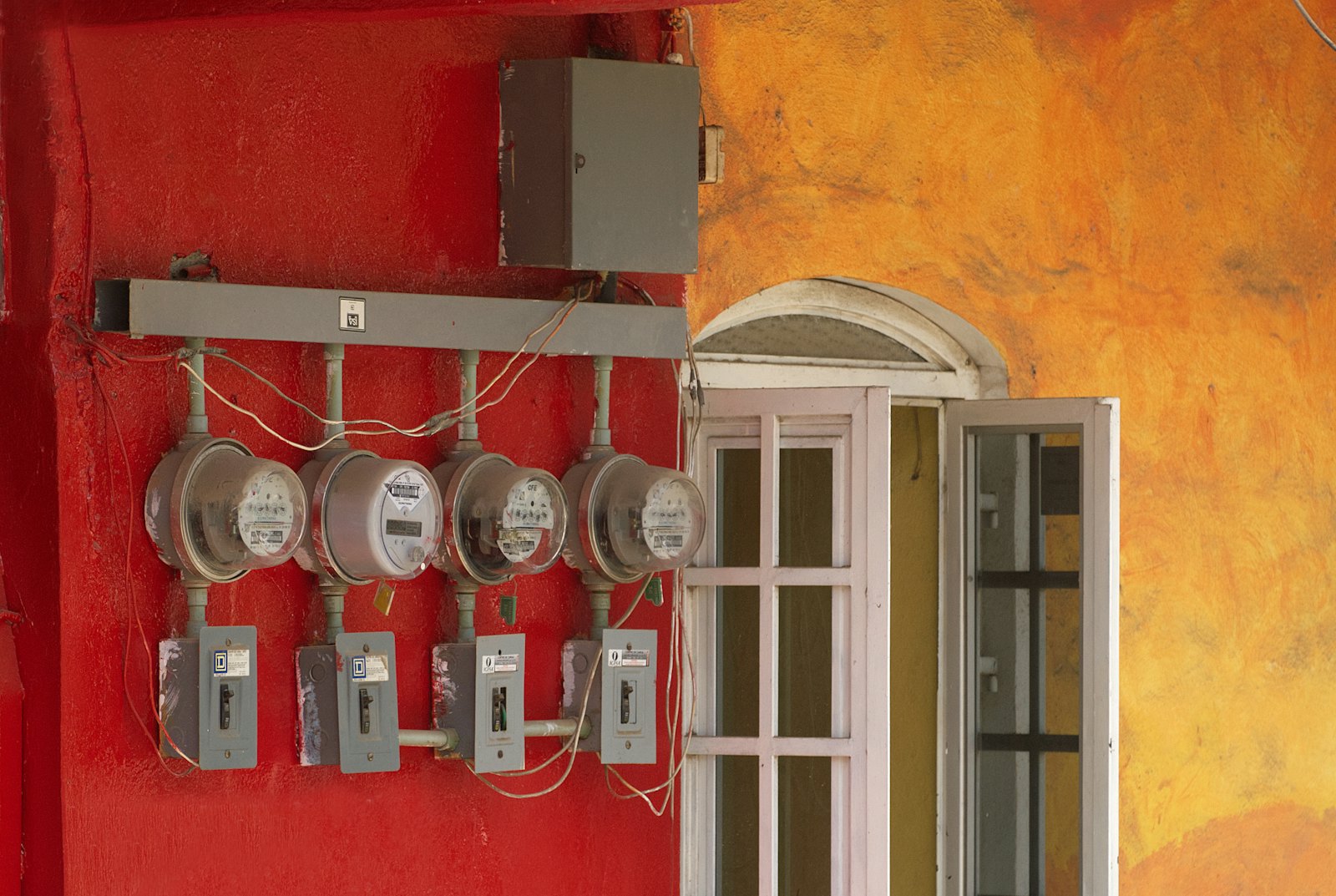
The honest cost of a panel upgrade
A 100A → 200A same-location upgrade typically runs $2,200–$4,500 fully installed. The main cost lines: panel hardware ($320–$520), licensed electrician labor ($1,800–$2,800 for a 1-day job loaded with insurance and overhead), permit ($150–$400), and utility coordination ($0–$500). When the meter base also needs replacement (common on 50+ year old services), add $380–$650.
What makes some upgrades cost $7,000+
- Moving the panel: Adds $1,200–$2,500. Usually worth doing if the existing location is hard to access (under stairs, in a closet) or if you're unfinishing the basement.
- New service entrance cable (SEC): The wires from the meter to the panel. If undersized for the new amperage, replacement runs $600–$1,400.
- Mast / weatherhead replacement: The exterior conduit running up to the utility drop. $400–$900.
- Grounding system upgrade: Old panels often have inadequate grounding. Adding a ground rod and bonding is $250–$500.
- AFCI/GFCI compliance: Modern code requires arc-fault and ground-fault protection on most circuits. If the new panel triggers a code-compliance review of the whole electrical system, count on $1,500–$4,000 in incidental upgrades.
What's actually inside a panel quote
A licensed electrician will itemize as follows: panel + main breaker + branch breakers, service entrance conductors, grounding, labor (rough + finish + utility coordination), permit and inspection, and contingency. Quotes that just say "panel upgrade — $4,200 turnkey" are hiding the line items, and you can't compare them to itemized quotes.
The insurance angle
Many insurers — Allstate, Travelers, Liberty Mutual — now decline to write or renew policies on homes with Federal Pacific Stab-Lok, Zinsco/Sylvania, or Pushmatic original panels. These panels have documented overcurrent-protection failures linked to house fires. If your renewal letter mentions "panel inspection required," replacement is usually the only path to keeping the policy.
Regional cost differences
| Metro | Multiplier | 100A → 200A interior swap |
|---|---|---|
| New York, NY | 1.42× | $4,828 |
| San Francisco, CA | 1.45× | $4,930 |
| Boston, MA | 1.32× | $4,488 |
| Los Angeles, CA | 1.28× | $4,352 |
| Seattle, WA | 1.26× | $4,284 |
| Washington, DC | 1.24× | $4,216 |
| Chicago, IL | 1.10× | $3,740 |
| Denver, CO | 1.08× | $3,672 |
| Miami, FL | 1.06× | $3,604 |
| Austin, TX | 1.04× | $3,536 |
Frequently asked questions
How do I know if I need a panel upgrade?
Three signs: (1) main breaker trips when multiple appliances run, (2) you have fewer than 200A and want to add EV charging, heat pump, or large kitchen, (3) your panel is a Federal Pacific, Zinsco, or Pushmatic — those are known fire hazards and most insurers now require replacement. Otherwise, an electrician's load calculation will give you a clear answer.
How long does a panel replacement take?
Same-location upgrade: 1 day with power out for 4–8 hours. Adding a sub-panel: 6–10 hours. Moving the panel to a new location: 2–3 days plus utility coordination. Permits and utility scheduling can add 1–2 weeks of calendar time.
100A vs 200A vs 400A — what do I need?
100A: bare minimum for older 1,500 sq ft homes with no major electric loads. 200A: the modern default — handles HVAC, EV charger, electric range, and reasonable expansion room. 400A: large homes (4,000+ sq ft), homes with shop/outbuilding loads, or homes planning multiple EVs. Most upgrades go from 100A or 150A to 200A.
Why does utility coordination add cost?
When you replace a service panel, the utility must disconnect and reconnect power at the meter. Some utilities do this free; others charge $200–$500 (especially if a new meter base is required). Schedule coordination is the slowest part — utilities often need 1–3 weeks notice.
Can I do an interior panel myself?
No. Not legally, not safely. Service panel work requires touching utility-owned hardware (the service drop or lateral) and pulling permits that require licensed electrician sign-off. Even unpermitted work invalidates homeowner's insurance for any future fire claims. Real cost of a DIY panel that catches fire: a destroyed house and rejected claim.
Federal Pacific Stab-Lok: how worried should I be?
Worried enough to replace it. Independent testing has shown Stab-Lok breakers fail to trip on overcurrent at rates of 25–60% — that's how panels start fires. Many insurers now require replacement before binding policies. Same goes for Zinsco panels and original Pushmatic.