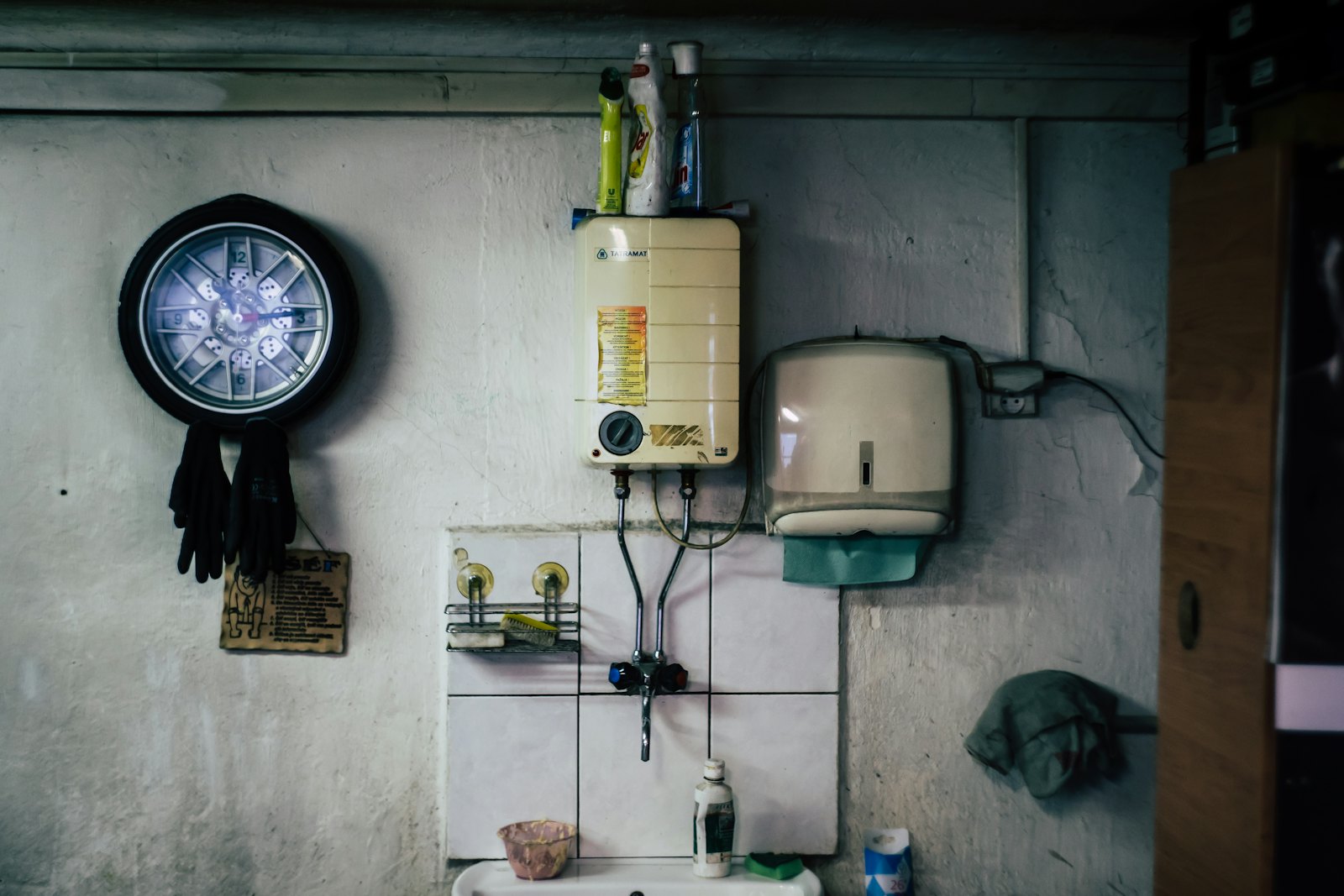
What a tankless install really costs
A typical retrofit from a 50-gallon tank to a gas tankless unit is $2,800–$5,200 fully installed. Electric tankless retrofits run $1,800–$3,500. The variance is mostly venting, gas line, and electrical. A unit that just slots in where the tank was is much cheaper than one that needs new venting punched through brick or a 3/4" gas line run from the meter.
The line items
- Gas tankless unit (3-bedroom home, 7 GPM): $1,100–$1,450. Major brands: Rinnai, Navien, Noritz, Rheem. Condensing models (95%+ efficiency) are now the default at this price point.
- Electric tankless unit: $750–$950 for whole-home. Point-of-use units are $250–$450.
- Installation labor: $950–$1,450 for a retrofit. New-location installs are $1,800+.
- Stainless steel venting kit: $480 for direct vent. Existing tank flue cannot be reused — the temperature differential is wrong.
- Gas line upgrade (very common): $400–$1,200. Tankless heaters need 1/2" to 3/4" line upgrades on most retrofits.
- Electrical upgrade (electric models): $300–$800 for 120A/240V dedicated circuits.
- Permit: $120–$300 typical.
Sizing it right (BTU and GPM)
Tankless capacity is measured in GPM (gallons per minute) at a specific temperature rise. A 1-bedroom apartment needs 4–5 GPM. A 3-bedroom family home needs 6–8 GPM. A 5+ bedroom home with multiple primary baths needs 9–11 GPM (often two units). Cold-climate installs need higher capacity because incoming water is colder — a 7 GPM unit in Florida is a 5 GPM unit in Minnesota.
The maintenance reality
Annual descaling is mandatory. Skip it for 3 years and you'll be replacing the heat exchanger ($800–$1,500 plus labor) or the whole unit. Have the installer add isolation valves ($80 hardware) so you can DIY-flush with a $150 pump kit. Pro service is $120–$220 per annual visit.
Regional cost differences
| Metro | Multiplier | 3-bedroom gas retrofit |
|---|---|---|
| New York, NY | 1.42× | $5,396 |
| San Francisco, CA | 1.45× | $5,510 |
| Boston, MA | 1.32× | $5,016 |
| Los Angeles, CA | 1.28× | $4,864 |
| Seattle, WA | 1.26× | $4,788 |
| Washington, DC | 1.24× | $4,712 |
| Chicago, IL | 1.10× | $4,180 |
| Denver, CO | 1.08× | $4,104 |
| Miami, FL | 1.06× | $4,028 |
| Austin, TX | 1.04× | $3,952 |
Frequently asked questions
Tankless vs tank — which is cheaper long-term?
Tankless wins on a 15+ year ownership timeline. Tankless lasts 18–22 years vs 8–12 for a tank. Energy savings are 20–30% (gas) or 15–20% (electric). Upfront cost is ~$1,500 more installed; payback is 8–12 years on gas, 12–15 years on electric. Below 8 years of ownership, a tank is the rational choice.
Will my gas line support a tankless heater?
Often not. Tankless gas heaters need 150,000–199,000 BTU/hr — about 3× a typical 50-gallon tank's 40,000 BTU. Existing 1/2" gas lines run to most water heaters can't deliver that. Upgrading to a 3/4" line costs $400–$1,200 depending on run length.
Is a 32-amp electric tankless going to overwhelm my panel?
A whole-home electric tankless needs 100–160 amps of dedicated capacity — yes, that's nearly an entire panel. Most homes can't accommodate one without a panel upgrade. Point-of-use electric units (single bathroom, 30–80A) are much more practical retrofit candidates.
Do tankless heaters really never run out of hot water?
In practice, you can run out if you exceed the unit's flow rate. A 7 GPM gas tankless handles 2 simultaneous showers comfortably. Trying to run 2 showers + dishwasher + clothes washer at once will produce lukewarm water. Size for peak draw, not average.
How long do tankless units actually last?
18–22 years for gas with annual descaling, 15–18 years for electric. Hard water dramatically shortens lifespan if you skip annual maintenance. A water softener or scale-prevention device ($300–$600) on incoming water roughly doubles longevity in hard-water regions.
Does it need annual maintenance?
Yes. Annual flushing (descaling with vinegar or a commercial descaler) is required to keep efficiency and avoid heat-exchanger damage. DIY in 30 minutes if your installer added isolation valves. Pro service is $120–$220 per visit.